

Yue’s Coaching Corner
1 spot left! My AI Amplified Leadership Accelerator starts next Monday! I am pumped after a great group that just finished a few weeks ago. The 6-week group coaching program brings together mid-career leaders who want to adapt and accelerate their careers in the age of AI.
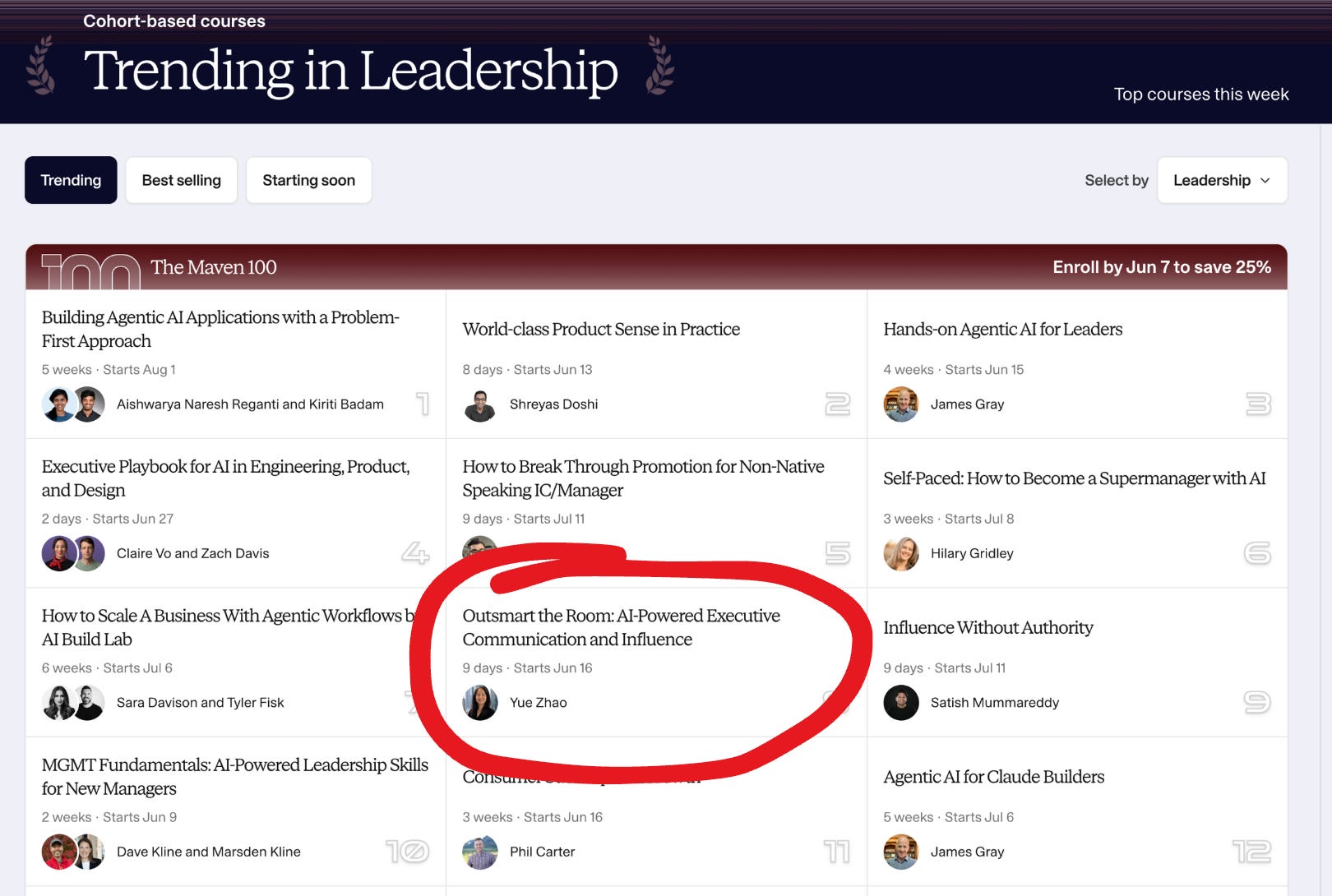
My course, Outsmart the Room: AI-powered Executive Communication & Influence was ranked #8 in Leadership and a Top 100 Maven course! =)
The next cohort starts in two weeks. Get $150 off with SPRING150 for a limited time.
If you’d like to try a free exercise, check it out here:
https://practice.theuncommonexecutive.com/ (built with love with Claude)
I have 2 coaching spots opening up in the summer. If you’re interested in working with me 1:1, hop on a free intro call here to see if we’re a good fit.
Super IC teams are the popular new kid on the block, growing at the same clip as AI-native company valuations. Every startup and scale-up wants to spin up 3-person cross-functional teams led by experienced individual contributors. The problem is, few know how to do it well and set it up for success. Many companies simply make the change, throwing groups of people together without much strategy. Others take their best, most expensive people to spearhead the effort. It turns out the key here is not just the people but, more importantly, the structure and environment created to help super ICs thrive.
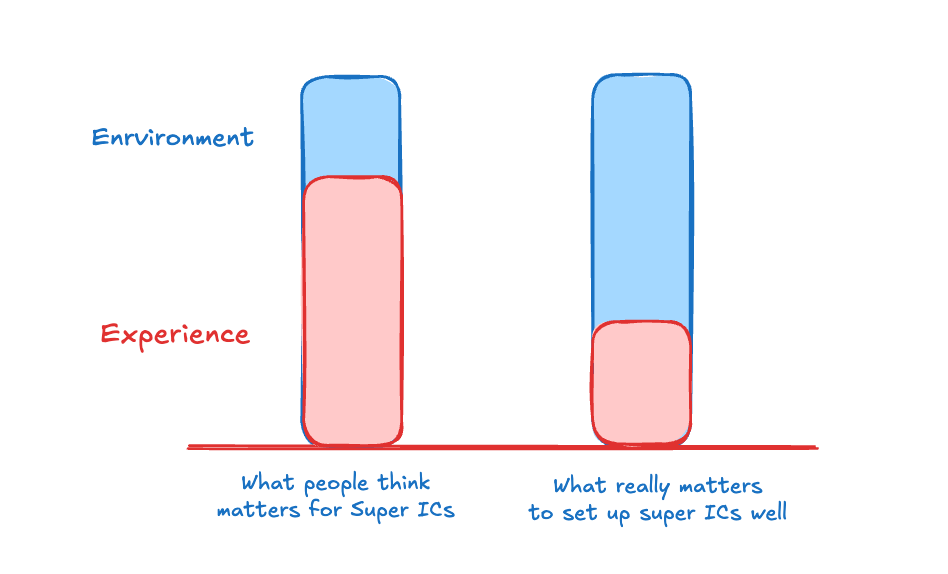
There is precedence (and learnings to look to). For a few years, I was a part of one at Instagram for the Instagram consumer teams. We tackled projects like hiding the Like count in the feed, the COVID-19 response, and more. These types of teams have existed at companies like Meta and Google for years. There have been many iterations on how the teams were set up. Here’s what works.
What Has to Be True
Four conditions separate the Super IC teams that generate outsized impact from the ones that quietly dissolve.
They must report to someone at the executive level who has outsized influence across the entire company.
At Meta, these teams reported directly to the CTO. The CTO influenced not just the tech teams, but also sales, finance, legal, marketing, and operations. Super IC teams need direct access to the latest information in real time. They need to be in the loop and up to date on the latest business strategy, competitive signals, and customer feedback. And they need a senior sponsor who can open doors that wouldn’t open based on their own seniority alone: code reviews from partner teams, a slot in someone’s roadmap, a conversation with busy teams, or data that lives in another team.
The team operates outside normal org structures. Without an involved and proactive executive sponsor, these teams spend half their time negotiating access and managing politics instead of building or moving fast in the wrong direction.
The team must be fully self-sufficient.
From ideation to launch to post-launch learning, every required function needs to be dedicated to the team. No borrowed engineers who are “mostly” committed. No designer supporting three other teams. Everyone is in the room, together. This generates speed. In some cases, leaders go as far as to exempt them from interviews, recruiting, mentorship, and more. The goal is to build as much focused time as possible.
It doesn’t require five days in the office for everyone. But it does require enough co-located time that the team develops the shorthand and trust that small, fast teams run on. A Super IC team operating asynchronously across fragmented schedules does not work.
Mandate a large customer problem and a grounded hypothesis for impact.
This is where Meta took years to get to the right level of rigor. The team’s operating style isn’t “test 100 things and see what sticks”. It is critical to hone in on a customer problem that, when solved, has a clear line of sight to business impact. Without it, the team will likely build something that is only delightful or interesting. The question isn’t “what could we build?” It’s “if this hypothesis is correct, does it become the next significant line of business for the company?” The bar for greenlighting a project is very high, often higher than for more mature products.
Not every company needs this. Early-stage startups where everyone is already working on growth don’t have the coordination problem Super IC teams are designed to solve. But for mature organizations trying to start a new business line, revamp an existing experience for a new use case, or shift how internal operations work across functions, this is one of the few proven approaches that actually gets past the innovator’s dilemma.
Plan for scale, before the need arises
As a project begins to show promise, the team needs to start finding its home in the larger organization before it gets to that level of scale. Incubation teams are not built to scale products. The decision criteria for handoff to another ongoing team that can scale the product need to be aligned in advance. When this is done late, the project stalls. New priorities arrive, the original team moves on, and the impact is lost.
The Added Bonus
The best of Super ICs do more than deliver on their projects. They modeled what great looks like at each step of the process: how to run a brainstorming session or product review, how to sell a business case, how to get buy-in from xfn teams, or how to navigate a tricky political situation. They set the bar for high performance, and are looked up to as leaders in the company through their expertise, and their influence traveled across org lines in ways that managers rarely can. In a time when AI adoption and shifting operating models are the priorities du jour, the people in these roles will leave a lasting impact on the future of the organizations they are in.
That’s all folks! See you next week at 3:14 pm.
Yue
I’m so proud! Woohoo!!! <3 I think it’s a great course. ;) https://practice.theuncommonexecutive.com/