

Client: I saw an issue with a process on my team recently and brought it up directly in a team meeting a few days later. I was very direct about the problem, gave all the details, and explained how it impacted everyone. To my surprise, my manager shut it down completely, and now I cannot get any buy-in from anyone. What happened? Where did I do wrong?
Being thoughtful and strategic in how you communicate has a bad reputation. Many high-performers think of it as being inauthentic, calculating, and manipulative. This trap comes in three different flavors.
If my idea is good, it should speak for itself. I shouldn’t have to manage how it lands. This is how a lot of strong technical people end up stuck.
I don’t want to tell people what they want to hear instead of the truth.
If I don’t just tell it as it is, then I'm being manipulative.
Being manipulative or telling people what they want to hear includes an element of deception. You are intentionally leaving out certain context in order to mislead or exaggerate the reality.
When you’re about to give a close friend difficult feedback, you think about how she’s doing that day, whether she’s already stressed, what she needs to hear first to know you’re on her side. We call that empathy and caring, not manipulation.
Being thoughtful about when, how, and with what framing you have a conversation is not deception. It’s best practice for communication excellence. The best leadership teams have a communication plan that has been carefully thought through for any major organizational change or product launch. Before any high-stakes or controversial conversation, it’s best practice to ask yourself: “How should I best communicate this?”
How To Be Direct And Strategic
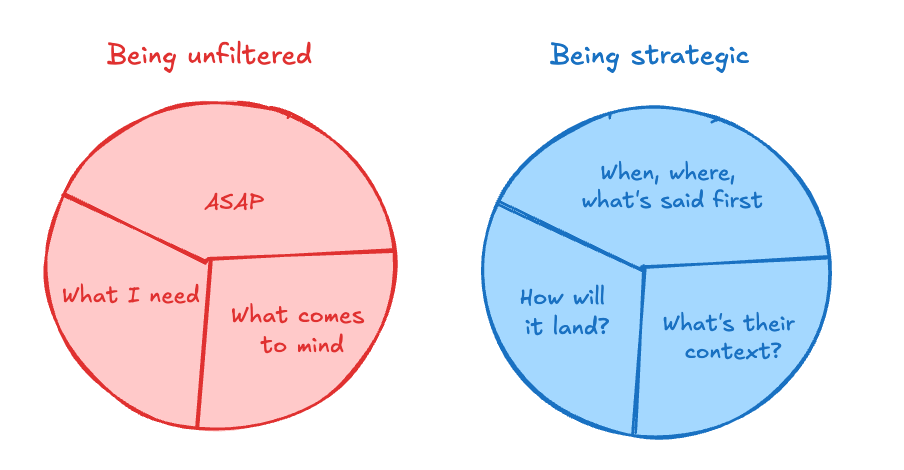
Being strategic in communication starts with empathy. It is grounded in knowing the context of the other person and caring about how it will impact them. Being direct means getting to the point or core of the issue quickly, without too much setup.
Here is what to strategize around for any high-stakes conversation:
What does this person already believe? Not what they should believe, or what the data says they should believe. Understanding their current mental model of the situation tells you where the friction points are before you walk in.
What emotion is this conversation likely to trigger? Conversations about performance, strategy, resources, or change almost always carry an emotional charge. This is information.
What needs to be said first? Knowing how to best open a conversation, particularly in a group setting, is a skill. Consider where the audience needs to be sold further, certain egos need to be appeased, or it’s appreciated to jump straight in.
Starting with these three points allows you to avoid triggering defenses so high that the conversation ends before anything real gets said. In being strategic, you’ll more effectively facilitate the conversation and move conversations forward.
My Client’s Next Steps
My client went back to her manager a few days after our conversation. Same problem. Same recommendation. But she started differently, by asking what her manager was hearing about the cross-team dynamic, why she thought it was happening, and what she was worried about. And then introduced her feedback in a way that added on to what she was hearing, and avoided triggering her worries.
“Yes, I think you’re right.” Her manager said with a big sigh. “It’s time to fix this.”
The truth didn’t change. The conversation did.
Strategic communication isn’t about compromising your integrity or authenticity. Done right, it’s what makes your integrity and authenticity shine to others.
That’s all folks! See you next week at 3:14 pm.
Yue
There is so much obsession about AI and what skills are relevant etc etc but the ability to communicate effectively with others is something we can never outsource and guidelines such as above are invaluable and timeless. Thanks for sharing.
True executive presence isn't just about being right—it's about the empathy to frame your technical truth so it solves your manager's worries instead of triggering them.